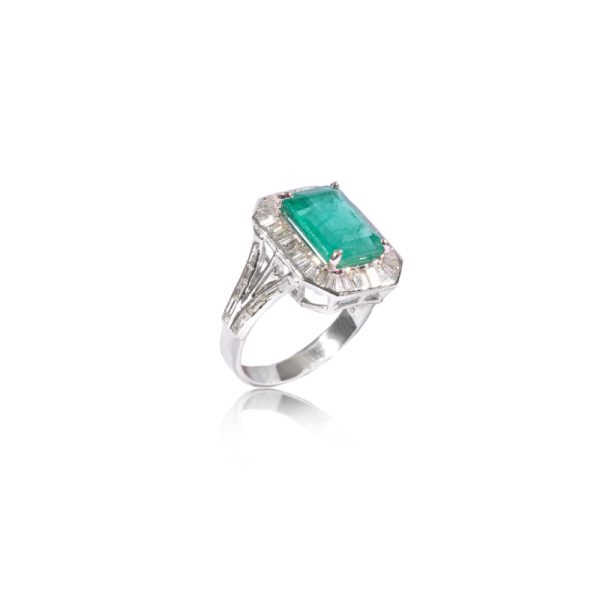
Attraction Beyond Utility
Luxury objects do not solve basic problems. A diamond does not keep you warmer, and gold does not improve function compared to simpler materials. Yet people consistently assign higher value to these items. This attraction is rooted in perception rather than utility. The human brain interprets rarity, visual brilliance, and durability as signals of importance. These cues evolved long before modern markets, when rare resources often meant survival advantage. Today, that instinct persists but expresses itself through aesthetic desire.
Visual Stimuli and Cognitive Response
Shiny surfaces and reflective materials trigger immediate attention. This is not accidental. Humans are biologically wired to notice light reflections because they historically indicated water sources. Jewelry mimics this visual signal. Gems refract light in complex ways, creating movement and depth that the brain finds difficult to ignore. The more dynamic the reflection, the stronger the engagement.
This response is fast and largely unconscious. It bypasses rational evaluation and creates an emotional reaction first, followed by justification, similar to how people react to engaging gaming platforms where anticipation and visual feedback drive behavior, such as Dream Casino which builds interest through atmosphere, reward expectation, and sensory appeal rather than pure logic.
Symbolism of Status
Luxury has always functioned as a social signal. Owning rare materials communicates access, power, or success. Even when individuals do not consciously seek validation, they operate within systems where appearance influences perception. Jewelry, in particular, is visible and portable, making it an efficient medium for signaling.
The key factor is not the object itself but what it represents. A simple piece gains significance if it is recognized as rare or costly. This symbolic layer transforms material into message. Without that shared understanding, luxury would lose much of its impact.
Emotional Anchoring
Precious items are often tied to moments rather than markets. Engagement rings, heirlooms, and gifted jewelry carry emotional weight that exceeds their physical value. Over time, the object becomes a container for memory. This process is known as emotional anchoring.
Once an item is linked to a meaningful event, its perceived worth becomes resistant to external evaluation. Even if market value changes, personal value remains stable or increases. This explains why people rarely treat certain luxury items as interchangeable goods.
The Role of Craftsmanship
Luxury is not only about materials but also about execution. Fine craftsmanship signals time, skill, and precision. These qualities are difficult to replicate at scale, which reinforces the perception of exclusivity. When a person recognizes the effort behind an object, the appreciation becomes more intellectual.
Attention to detail also creates a sense of intentionality. Every curve, setting, and finish appears deliberate. This contrasts with mass production, where uniformity often reduces perceived uniqueness. Craftsmanship, therefore, adds depth to the experience of ownership.
Key Drivers of Perceived Luxury
- Rarity of materials and limited availability
- Complex visual effects such as light reflection and depth
- Association with status and recognition
- Emotional significance tied to personal events
- Visible evidence of skilled craftsmanship
Identity and Self-Expression
Luxury items allow individuals to construct and communicate identity. Choices in design, color, and form reflect preferences that go beyond function. A bold piece may signal confidence, while a minimal design may suggest restraint and precision. These signals operate subtly but consistently.
Importantly, the meaning is not fixed. The same object can represent different things depending on the wearer. This flexibility makes luxury a powerful tool for personal expression. It adapts to context while maintaining its core value.
Scarcity and Desire
Scarcity intensifies desire. When access is limited, the perceived value increases regardless of intrinsic qualities. This is a well-documented cognitive bias. Limited editions, rare stones, and exclusive collections all leverage this principle.
- Limited availability increases perceived importance
- Social awareness amplifies desirability
- Ownership becomes a form of proof rather than utility
The effect is amplified when scarcity is visible or widely recognized. If others know that an item is difficult to obtain, ownership becomes more meaningful. The object transforms into proof of access rather than just an aesthetic choice.
Control and Permanence
Precious materials offer a sense of permanence. Gold does not corrode, and many gemstones retain their structure over long periods. This durability contrasts with the transient nature of most modern products. Owning something that endures provides psychological stability.
There is also an element of control. Unlike intangible assets, jewelry is physical and directly possessed. It can be held, worn, and passed on. This tangibility reinforces the feeling of ownership in a way that abstract value cannot.
Conclusion
The attraction to luxury is not superficial or random. It is a layered response shaped by biology, psychology, and social context. Shine captures attention, rarity signals importance, and craftsmanship builds respect. Emotional connections deepen value, while scarcity sharpens desire.
Luxury objects persist because they operate on multiple levels at once. They engage the senses, communicate status, and store meaning. This combination makes them more than decorative items. They become symbols that people use to navigate identity, memory, and perception.